 EN
EN


Epoxy Resin Tables 2026: Strong Growth Powered by Sustanility&Craft Upgrades | Global Industry Report
Published: April 1, 2026
Up to march 31, 2026 – The global epoxy resin table market is experiencing strong growth in 2026, driven by sustainability innovation, bio-based material breakthroughs, and rising demand for custom, eco-friendly luxury furniture. With green production, refined craftsmanship, and wider commercial adoption, epoxy resin tables have evolved from niche art pieces into mainstream interior design staples, leading a new wave of high-end home and commercial space upgrades.
The Development Trend of Epoxy Resin Table 2026
Sustainability has become the core driving force of the epoxy resin table sector in 2026, supported by regulatory tightening, consumer health awareness, raw material volatility, and global low-carbon transitions. Consumers, designers and commercial clients increasingly prioritize low-carbon, non-toxic, recyclable and healthy materials, as traditional petroleum‑based epoxy faces growing scrutiny over high VOC emissions, BPA concerns, and end-of-life disposal challenges. Bio-based epoxy, low-VOC formulas, and upcycled reclaimed wood have evolved into industry standards, helping brands meet green building certifications, comply with REACH and EPA rules, and avoid carbon tariffs in global trade. Technological breakthroughs further reinforce this shift: bio-based resins cut carbon footprints by over 30% while delivering equal or better strength, and recyclable epoxy systems enable material reuse, solving the industry’s longstanding waste problem.
At the same time, design aesthetics are shifting toward natural, matte and organic styles, driven by the rise of biophilic design, Modern Tuscan trends, and demand for understated luxury . Matte/satin finishes, amber and smoky transparent resin, and live-edge structures are replacing high-gloss and bright-color designs, as matte surfaces offer softer visuals, better scratch and fingerprint resistance, and a more authentic tactile experience that aligns with today’s preference for calm, cozy interiors . This aesthetic shift coincides with broader market expansion: epoxy tables are moving rapidly from residential spaces to hotels, restaurants, offices and high-traffic commercial venues, where durability, uniqueness and eco-credentials are equally valued. Meanwhile, DIY culture and professional customization continue to boost market penetration, supported by accessible tutorials, safer low‑VOC kits, and growing consumer desire for one-of-a-kind, artisanal home pieces.
Together, these forces—policy compliance, health consciousness, cost resilience against oil price swings, design evolution, and cross-scene demand—are solidifying sustainability and refined natural styling as the twin pillars of long-term industry growth.
Epoxy Resin Table Production Process & Craft Treatment
The rapid growth of the epoxy resin table market is inseparable from the continuous advancement of its processing crsftsmanship. The production of a finished epoxy resin table requires the following six processes, each of which is indispensable.
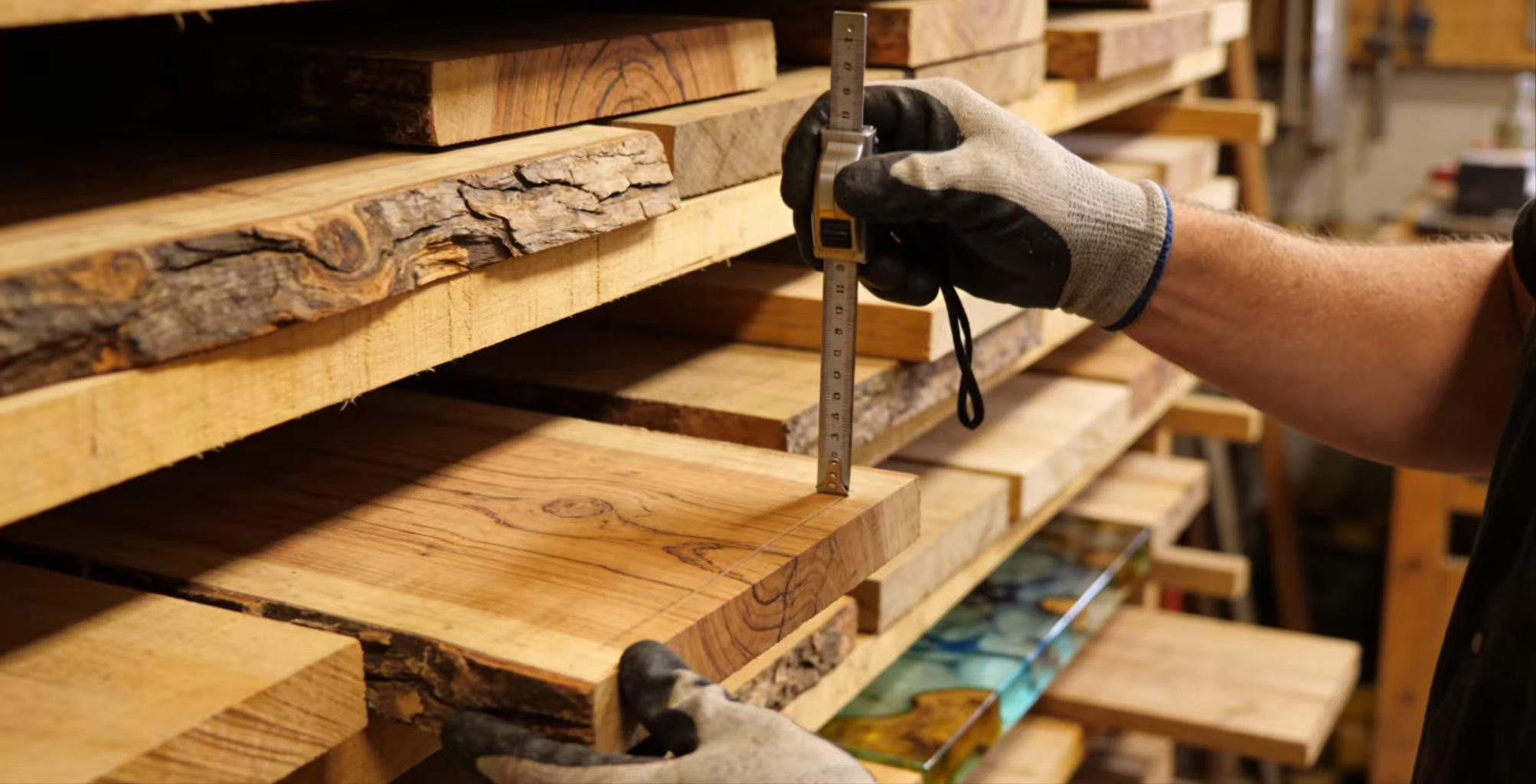
Material Selection
High-quality dried solid wood or reclaimed wood is selected to ensure stability and deformation resistance. Factories prefer bio-based epoxy resin made from plant materials and agricultural waste, which is low-VOC, high-strength and eco-friendly.
Surface Treatment
Wood surfaces are polished, cleaned, dried and repaired to remove dust, oil and loose parts. Defects are filled to avoid bubbles, cracks and pinholes during resin pouring.

Proportioning & Mixing
Epoxy resin and curing agent are mixed at a precise ratio. Professional defoaming and vacuum treatment are applied to minimize bubbles. Natural pigments (amber, smoky black, clear) are added for a mild, high-end texture.

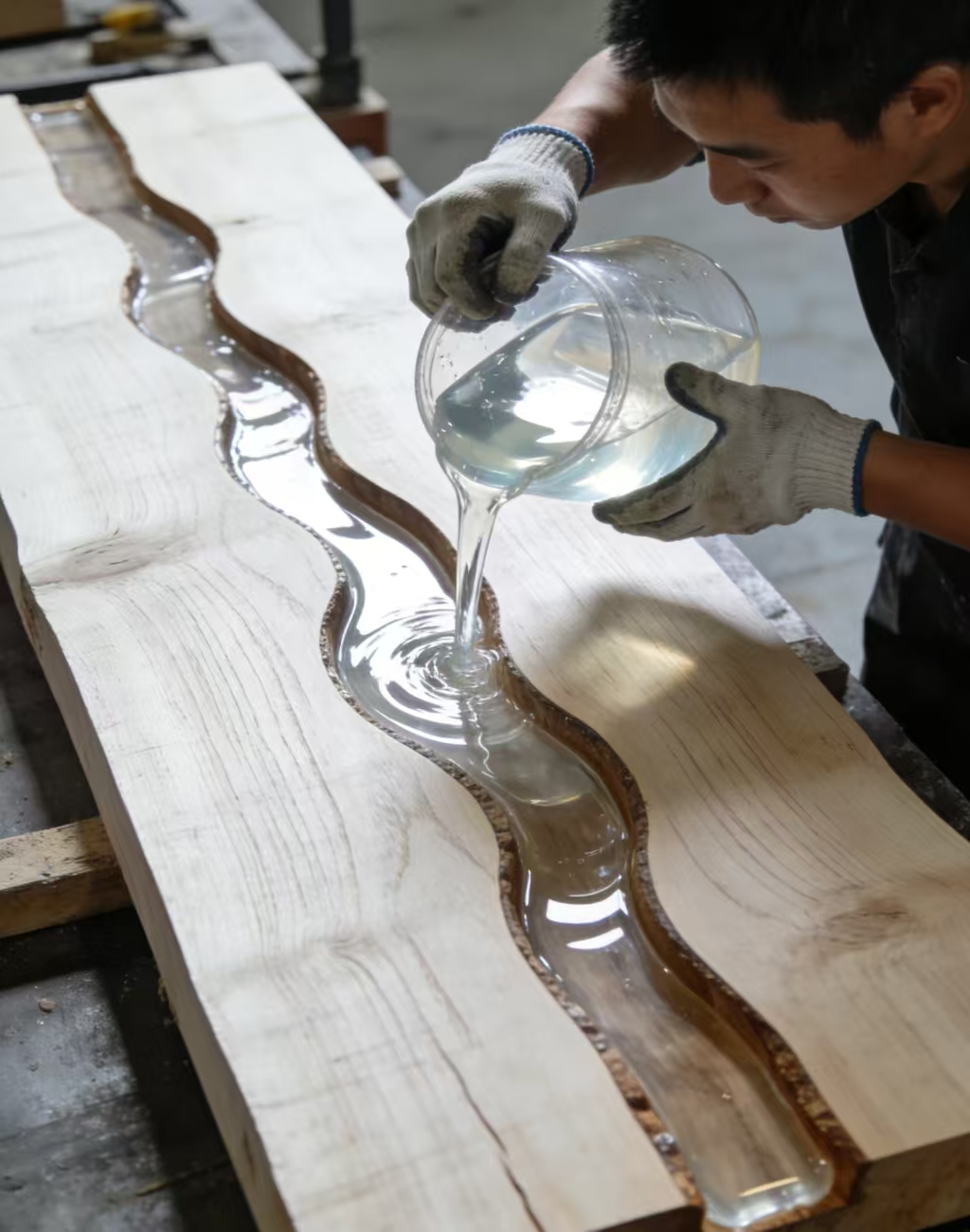
Pouring & Leveling
Resin is poured evenly into wood gaps, river grooves and table surfaces. Workers use torches or sprayers to eliminate surface bubbles, ensuring flatness and transparency.
Curing & Forming
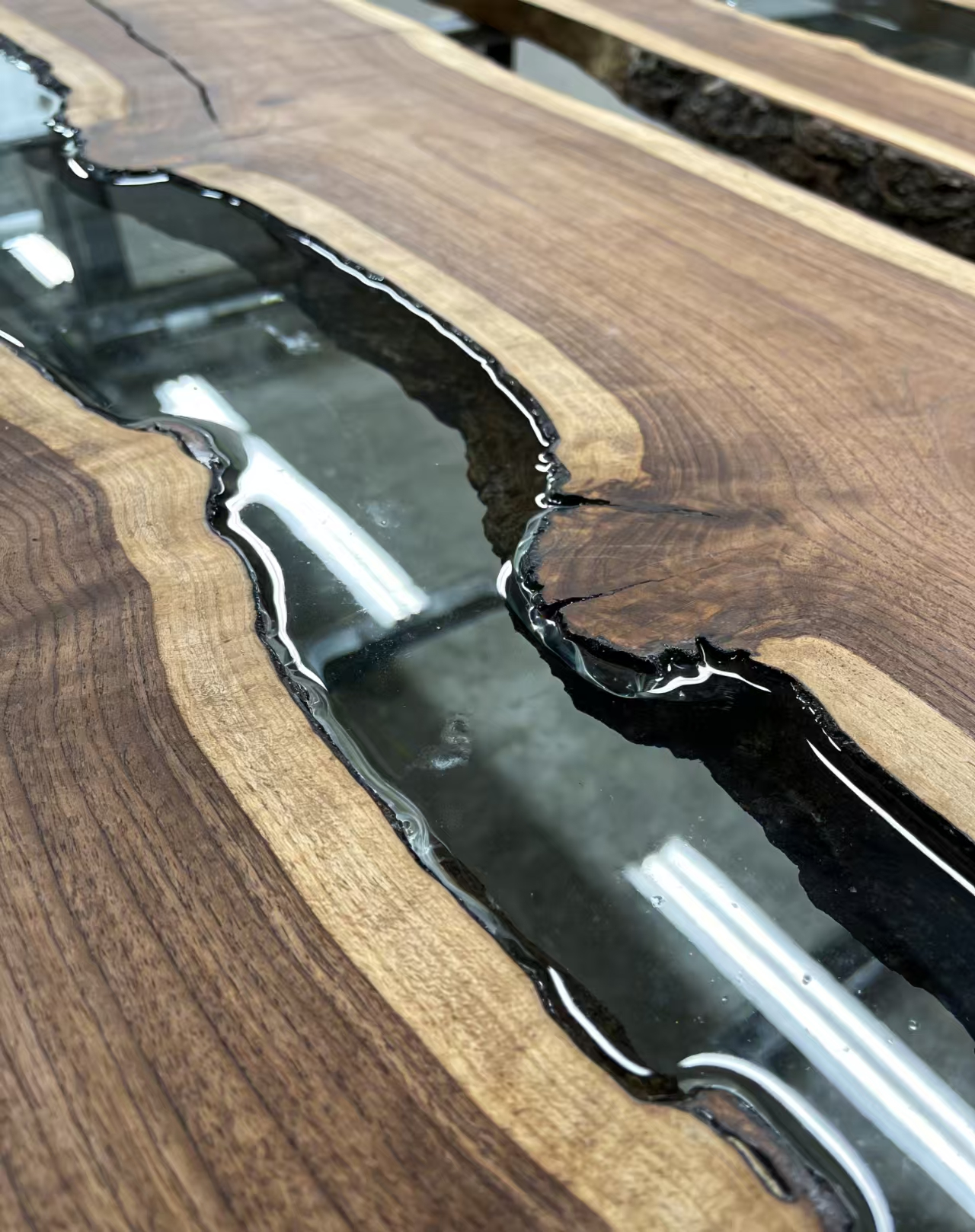
Tables cure under constant temperature for 24–72 hours. After full solidification, they are cut, sanded, shaped and polished into live-edge or streamlined designs.
Finishing & Protection
Matte or satin topcoat is applied for better scratch resistance, fingerprint resistance and durability. Protective sealing greatly extends service life and reduces daily maintenance.

Industry Development & Future Outlook
The epoxy resin table industry is moving toward greenization, standardization, intelligence and branding.
First, environmental policies and consumer awareness will continue to push the industry toward recyclable epoxy systems and bio-based materials. The global bio-based epoxy market is projected to reach $11.5 billion by 2036 with a 5.5% CAGR.
Second, intelligent manufacturing will improve efficiency and consistency. Automated mixing, defoaming, polishing and quality control will lower costs and stabilize product quality.
Third, market space will keep expanding. The Asia-Pacific region, which accounts for 53% of global epoxy demand, will be the main growth engine. Customization, commercial engineering and branded furniture will bring higher added value.
In the future, epoxy resin tables will continue to blur the boundary between furniture and art. Brands that combine sustainable materials, mature craftsmanship and innovative design will lead the global market.